10 Eye-Opening Examples of Fraud You Need to Know About
Fraud is an unfortunate reality that affects individuals, businesses, and economies worldwide. Understanding the various forms of fraud can help protect you and your assets from becoming a victim. Let's explore some of the most notorious fraud cases and how they operate.
Discover the World of Deception
Throughout history, from ancient tactics like the Trojan Horse to modern-day Ponzi schemes, deception has remained a constant threat. For organizations in finance, insurance, cryptocurrency, and professional services, understanding fraud is essential for their long-term success. The impact of fraud extends beyond direct financial losses – it damages reputations, breaks public trust, and can destabilize entire organizations and systems.
Today's interconnected financial networks enable instant cross-border transactions, creating new vulnerabilities that fraudsters exploit. While traditional scams relied on basic information gaps and trust manipulation, modern fraud has evolved into sophisticated digital attacks using phishing, identity theft, and complex financial manipulation. The most effective fraudulent schemes combine social engineering, technical skills, and the exploitation of both system and human weaknesses. A skilled fraudster understands how to manipulate basic human emotions - greed, fear, or even generosity - to achieve their goals.
This guide will examine real-world fraud examples, breaking down how they work, their consequences, and the warning signs that can help protect you and your organization. By learning to recognize common deceptive tactics, you'll be better prepared to identify risks before they turn into losses. We'll focus on practical strategies to strengthen your defenses against both established and emerging fraud threats.
{{snippets-case}}
1. Ponzi Scheme
A Ponzi scheme is a deceptive investment scam where operators pay existing investors using money from new investors, rather than from actual business profits. This creates a false appearance of success that attracts more investors. When new investments slow down, the scheme collapses, causing most participants to lose their money.

Key Characteristics of Ponzi Schemes:
- Unrealistic Return Promises: Operators promote returns well above market averages with minimal risk claims
- Payment Structure: Early investors receive payments funded by new investor money, not real profits
- Continuous Recruitment: The scheme only works with ongoing recruitment of new investors
- Social Networks: Scammers often target specific communities to exploit existing trust relationships
Major Drawbacks:
- Guaranteed Failure: The scheme will collapse when new investor recruitment slows
- Severe Financial Impact: Most investors lose their entire investment
- Legal Consequences: Operators face heavy fines and prison time
Notable Examples:
- Bernie Madoff Scheme: The largest Ponzi scheme in history, defrauding investors of $65 billion over decades by targeting wealthy individuals and institutions
- Original Charles Ponzi Scam: The 1920 postal coupon fraud that gave the scheme its name, promising 50% returns in just 45 days
Historical Context:
Simple promises of fast wealth make Ponzi schemes a recurring problem. While modern financial systems and the internet have made these scams easier to run, high-profile cases have increased public awareness. However, the basic appeal to both scammers and victims remains strong.
Protection Guidelines:
- Review Investment Claims: Question any opportunity promising unusual returns with minimal risk
- Check Credentials: Research the background of investment advisors through SEC and other regulators
- Study the Strategy: Make sure you understand exactly how the investment generates returns
- Watch Your Statements: Look for unusual patterns or inconsistencies in account reports
By learning to spot Ponzi scheme warning signs, financial professionals can better protect their clients from these destructive scams.
2. Identity Theft
Identity theft is a serious crime affecting millions of people yearly. This type of fraud involves criminals obtaining sensitive personal information like Social Security numbers, dates of birth, addresses, and account details to impersonate victims and access their financial accounts. The impact on victims can be devastating, leading to major financial losses, damaged credit scores, and significant emotional trauma.

Key Elements of Identity Theft:
- Personal Data Theft: The foundation of identity theft starts with stealing sensitive personal information like SSNs, driver's licenses, birthdays, addresses, bank details, and login credentials.
- Account Hijacking: Thieves use stolen data to break into victims' financial accounts, drain funds, make unauthorized purchases, and modify account information.
- Credit Card Misuse: New credit cards are opened using stolen identities, with thieves racking up charges that damage victims' credit.
- Tax Fraud: SSNs are used to file fake tax returns and steal refunds meant for legitimate taxpayers.
Real-World Cases and Growth:
Identity theft methods have grown more advanced as technology has progressed. Major data breaches now provide criminals with personal information on massive scales:
- 2017 Equifax Breach: 147 million people had their personal data exposed, including SSNs, birthdates, addresses and licenses.
- 2013 Target Breach: 41 million customers had credit and debit card information compromised.
These incidents show just how vulnerable personal data has become. The rise of sophisticated phishing attacks and malware has made identity theft even more challenging to prevent.
Prevention Best Practices:
For companies handling sensitive data, robust security is essential. Key steps that compliance teams should focus on:
- Credit Monitoring: Encourage regular credit report reviews to catch suspicious activity early
- Password Security: Promote strong, unique passwords and discourage password reuse
- Two-Factor Authentication: Make 2FA mandatory where possible for added account protection
- Data Privacy Training: Teach safe handling of personal information and recognition of phishing attempts
- Security Systems: Invest in encryption, access controls, and intrusion detection to protect customer data
- Response Planning: Create clear procedures for handling potential data breaches and identity theft
By understanding how identity theft works and implementing strong preventive measures, both individuals and organizations can better protect themselves from this common crime.
3. Credit Card Fraud
Credit card fraud refers to the unauthorized use of credit cards or card data for unlawful transactions and withdrawals. This is a major concern that affects consumers, businesses and financial institutions worldwide. This threat requires attention from all players in the financial sector, including banks, payment processors, compliance teams and security firms.

The main types of credit card fraud include:
- Card Skimming: Thieves use special devices to copy card data from the magnetic stripe when cards are swiped at compromised ATMs or payment terminals
- Card Cloning: Criminals create duplicate cards using stolen card information to make fraudulent purchases
- Online Payment Fraud: Scammers steal card details during web transactions through phishing, malware and hacks of shopping sites
- Account Takeover: Fraudsters gain control of card accounts by stealing login credentials, allowing them to change account details and make unauthorized charges
Real-world Impact: The 2017 Equifax breach exposed the personal and financial data of 148 million people, showing how even major institutions can fall victim to data theft. This incident demonstrated the widespread damage possible from a single breach.
Credit card fraud has changed with technology. While physical card theft was once common, criminals now focus on stealing card data through online channels. Mobile payments and digital wallets create new opportunities for fraud that require updated security measures.
Key Problems:
- Direct Financial Losses: Victims face unauthorized charges and withdrawals from their accounts
- Credit Score Impact: Fraud can severely damage credit scores and make it harder to get loans
- Recovery Process: Fixing credit card fraud requires significant time and effort to dispute charges and restore accounts
Prevention Tips:
- Monitor Statements: Check your credit card activity regularly and report suspicious charges right away
- Use EMV Chips: Chip-enabled cards provide better security than magnetic stripes alone
- Protect Your PIN: Never share PINs and avoid writing them down
- Shop Securely Online: Look for "https" and the lock icon before entering card details. Be careful with emails requesting financial information.
By staying alert to fraud risks and following basic security steps, both individuals and organizations can better protect themselves against credit card crime. Taking action to prevent fraud helps maintain financial safety and trust in payment systems.
4. Insurance Fraud
Insurance fraud poses a serious threat to the financial health of insurance companies and their customers. When people make false or inflated insurance claims to get money dishonestly, it drives up costs for everyone and undermines trust in the system.
Common types of insurance fraud include:
- Staged Accidents: Deliberately causing collisions to file fraudulent claims. For example, a fraudster might suddenly brake, causing an innocent driver to rear-end them.
- Inflated Claims: Making legitimate claims but exaggerating values, like overstating jewelry costs or repair bills.
- False Medical Billing: Billing for medical services never provided or charging for more expensive procedures than performed.
- Property Damage Fraud: Filing fake claims for burglaries, arson, or natural disaster damage.
The impact of insurance fraud affects everyone:
- Higher Premiums: Insurance companies raise rates across the board to cover fraud losses.
- Legal Consequences: Fraudsters face criminal charges, fines, and jail time.
- Civil Penalties: Insurance companies can sue to recover money from fraud.
Notable Cases:
- The Martin Frankel Case: In the 1990s, Frankel stole $200 million by buying and draining insurance companies. He fled but was caught and convicted.
- Operation Whiplash (2014): A major fraud ring staged crashes and filed fake medical claims worth millions. Multiple arrests followed.
Modern Trends:
Digital tools have changed how insurance fraud happens. Online systems make it easier to falsify documents, but also help detect suspicious patterns.
Key Prevention Strategies:
- Use Data Analysis: Track patterns and flag unusual claims using advanced analytics.
- Strengthen Verification: Double-check claims details and cross-reference information.
- Share Intelligence: Work with other insurers and law enforcement to identify fraud trends.
- Train Staff: Teach employees to spot warning signs of fraudulent claims.
Understanding insurance fraud - how it works, its effects, and prevention methods - helps financial companies protect themselves and their customers from this expensive crime. The keys are staying alert, using smart verification systems, and working together across the industry.
5. Wire Transfer Fraud
Wire transfer fraud remains one of the most damaging types of financial crime, primarily because it exploits rapid, irreversible money transfers. This fraud carries major financial risks for both individuals and companies, with scammers continuously adapting their methods to fool victims into sending funds electronically. The key danger lies in the permanence - once money is wired, recovery is nearly impossible.
How it Works:
Wire transfer scams rely on convincing victims that a transfer request is legitimate. Common approaches include:
- Business Email Compromise (BEC): Criminals hack business email accounts to pose as executives or vendors requesting urgent transfers. A typical example is CEO fraud, where scammers impersonate company leaders to authorize payments to fake accounts.
- Romance Scams: Fraudsters build fake romantic relationships online to gain trust before requesting emergency wire transfers.
- Emergency Schemes: Scammers claim a family member needs immediate financial help overseas, often targeting grandparents with urgent pleas for medical or legal expenses.
- Cross-Border Transfers: International wire transfers add complexity, making fund recovery more challenging due to multiple jurisdictions.
Real-World Examples & Case Studies:
- The Nigerian Prince Scam: While now widely known, this classic scheme demonstrates how criminals use promises of wealth to manipulate victims into wiring money.
- A major corporation lost millions when staff wired payments to what appeared to be a trusted vendor's account. The funds quickly moved overseas, making recovery impossible.
Evolution and Popularity:
This fraud type has grown alongside online banking adoption. While wire transfers serve valid business needs, criminals exploit their speed and finality. Scam tactics shift with current events - for instance, fraudsters have used COVID-19 to create fake charity wire transfer schemes.
Practical Tips for Prevention:
- Double-Check All Requests: Verify wire transfer requests through a separate communication channel using known contact details.
- Question Urgent Demands: Be highly suspicious of any rushed wire transfer request, as urgency is a common pressure tactic.
- Require Multiple Approvals: Implement dual authorization for wire transfers, especially large amounts.
- Train Staff: Provide regular education on wire fraud tactics, particularly for employees handling transfers.
- Use Strong Security: Apply robust passwords and multi-factor authentication on all email and financial accounts.
Benefits of Prevention:
- Financial Protection: The main advantage is avoiding potentially devastating monetary losses.
- Brand Trust: Preventing fraud helps maintain customer and partner confidence.
- Business Continuity: Avoiding fraud means fewer disruptions to normal operations.
By learning wire transfer fraud methods and motivations, organizations and individuals can take concrete steps to protect their finances.
{{snippets-guide}}
6. Healthcare Fraud
Healthcare fraud is a costly deception that drains billions from healthcare systems and ultimately harms patients. This type of fraud has severe impacts on financial institutions, insurance companies, and the public through inflated costs and compromised care quality.
Features of Healthcare Fraud:
Common fraudulent schemes include:
- Billing for services not rendered: Filing claims for medical services or equipment never provided to patients, from fake appointments to non-existent procedures
- Upcoding: Charging for more expensive procedures than what was actually done, like billing a complex surgery when only a basic consultation occurred
- Kickback schemes: Making illegal payments to get referrals or prescribe specific medications, putting profits above proper patient care
- Unnecessary medical procedures: Performing unneeded medical services purely for financial gain rather than patient benefit
Consequences of Healthcare Fraud:
This type of fraud creates serious problems:
- Higher costs: Fraudulent activities drive up healthcare expenses, resulting in increased premiums and out-of-pocket costs
- Patient harm: People may receive unnecessary procedures or be denied needed care, leading to poor health outcomes
- Legal penalties: Offenders face major fines, jail time, and exclusion from federal healthcare programs
Real-World Examples:
Notable cases show the scale of healthcare fraud:
- 2019 $1.2 Billion Medicare Fraud: A network used telemedicine companies and medical equipment suppliers to submit false claims for unnecessary services and equipment
- Operation Brace Yourself (2019): Law enforcement uncovered a $1.7 billion scheme where medical professionals ordered unnecessary braces and equipment for Medicare patients
How Healthcare Fraud Has Changed:
Digital health records and telemedicine growth have opened new fraud opportunities. Complex billing systems and high transaction volumes make detection difficult. The COVID-19 pandemic created more vulnerabilities through relaxed rules and increased remote care.
Practical Tips for Implementation:
For financial institutions, FinTech companies, and compliance teams:
- Use data analytics: Apply advanced tools to spot suspicious patterns in claims
- Check credentials: Verify providers, services, and prescriptions before payment
- Audit regularly: Review claims data often to catch fraud early
- Partner with authorities: Share information and coordinate with law enforcement
- Train staff: Teach employees to recognize fraud warning signs
- Monitor regulations: Stay current on healthcare rules and requirements
Financial institutions and related organizations can better protect themselves and their clients by understanding how healthcare fraud works, its effects, and ways to prevent it.
7. Securities Fraud
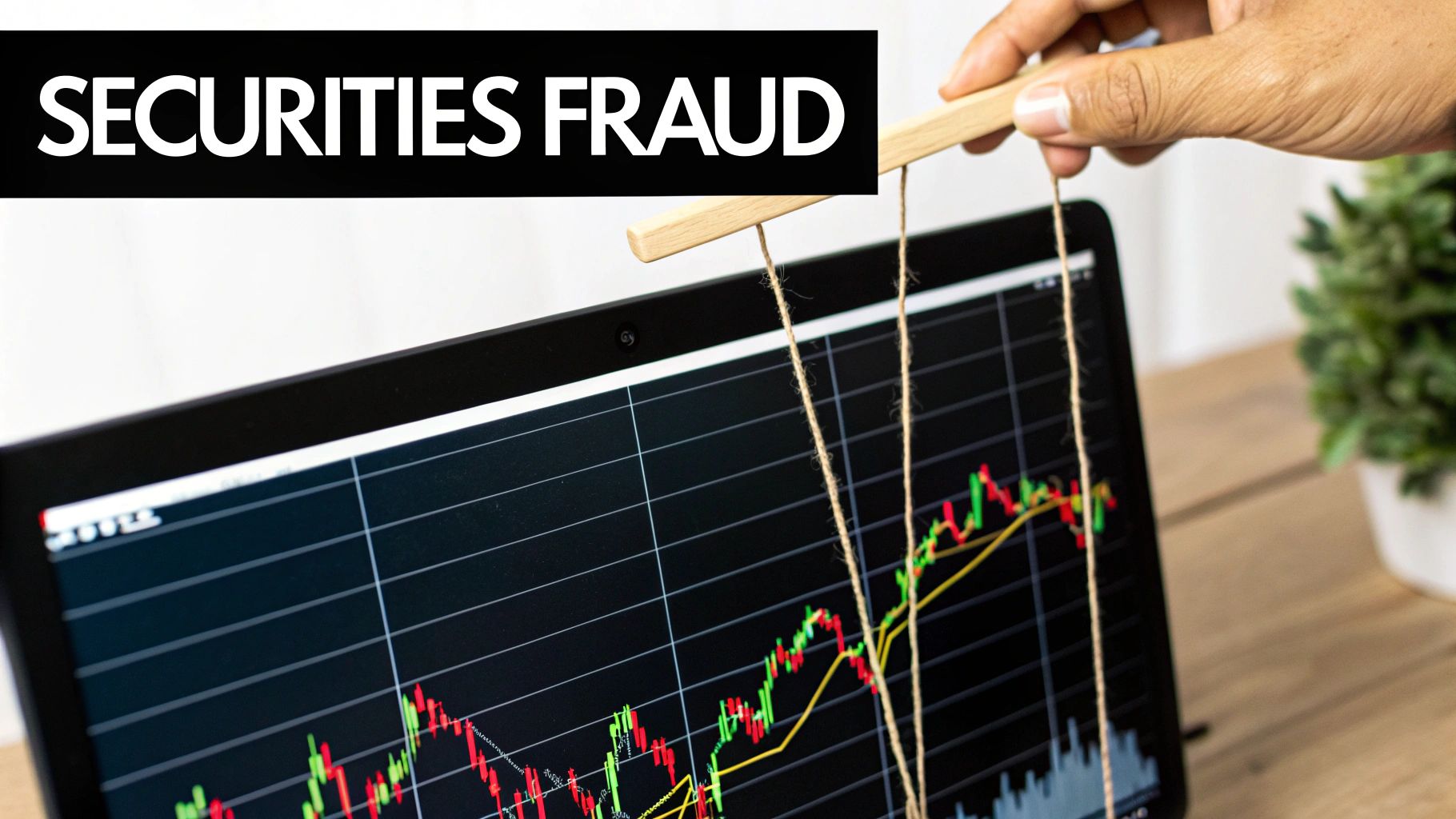
Securities fraud poses major risks to financial markets and investor trust. This type of fraud involves deceptive practices in stock and commodity markets that aim to manipulate prices or mislead investors. The impact can be devastating, causing widespread financial losses and eroding confidence in the financial system.
Key Types of Securities Fraud:
Securities fraud typically involves misrepresenting important information about investments. The main forms include:
- Insider Trading: Making trades based on confidential company information that isn't public yet, giving unfair advantages to those with inside access
- Market Manipulation: Artificially influencing security prices through false rumors, pump and dump schemes, or creating fake trading volume
- Accounting Fraud: Falsifying company financial statements to deceive investors about financial health, including inflated revenues or hidden losses
- Pump and Dump: Artificially driving up stock prices (often penny stocks) with misleading positive statements, then selling at the peak for profit
Notable Historical Cases:
Two cases highlight the serious consequences of securities fraud:
- Enron (2001): Executives hid billions in debt through complex accounting tricks, leading to the company's collapse and massive investor losses. This exposed the dangers of opaque financial instruments.
- WorldCom (2002): The company inflated earnings by billions through fraudulent accounting, contributing to declining market confidence after the dot-com crash.
Key Trends:
Several factors have shaped modern securities fraud:
- Reduced Regulations: Periods with fewer market rules can enable fraudulent behavior
- Digital Trading: Online platforms make it easier to spread false information and manipulate markets
- Complex Financial Products: New sophisticated investment products can obscure fraudulent activity
Popular media portrayals like "The Wolf of Wall Street" have drawn attention to securities fraud by showing how some gained immense wealth through illegal schemes, though ultimately facing legal consequences.
Prevention Guidelines:
- Research Thoroughly: Always investigate thoroughly before investing
- Review Financial Documents: Look for red flags in company statements, like unusual accounting methods
- Question Unsolicited Offers: Be very cautious about unexpected investment opportunities promising high returns
- Report Problems: Alert regulators to suspected fraud immediately
- Strong Controls: Companies should maintain robust internal oversight and regular audits
- Regular Training: Staff need ongoing education about securities rules and ethical standards
Understanding how securities fraud works, watching for warning signs, and following proper safeguards helps protect investors and organizations. Maintaining ethical standards and staying alert are essential for protecting market integrity.
8. Tax Fraud
Tax fraud is the deliberate act of evading taxes owed to the government. It involves illegal methods used to minimize or eliminate tax obligations. This crime significantly damages public finances by depriving governments of essential revenue needed for public services, while unfairly burdening honest taxpayers.
Features of Tax Fraud:
- Unreported Income: Failing to declare earned income from wages, investments, self-employment, or gig work
- False Deductions: Making up or inflating deductions like charitable donations or business expenses to reduce taxable income
- Hidden Accounts: Using offshore accounts and complex financial structures to hide assets and income from tax authorities
- Employment Tax Fraud: Not withholding or paying required payroll taxes, or wrongly classifying employees as contractors
Real-World Examples:
- UBS Case (2009): The Swiss bank UBS paid major penalties for helping wealthy US clients hide money in undeclared offshore accounts to evade taxes
- Panama Papers (2016): Leaked documents exposed a vast network of shell companies used globally to conceal assets and avoid taxes, showing the scope of tax evasion schemes
Current Trends:
Digital currencies and easier international transfers have created new tax evasion methods. Cryptocurrencies' anonymity and the growth of offshore financial centers make tracking illicit money flows more challenging for authorities.
Key Prevention Steps for Compliance Teams:
- Enhanced Due Diligence: Implement strong KYC and AML procedures
- Transaction Monitoring: Watch for suspicious patterns like large transfers to offshore accounts
- Data Analytics: Use data tools to spot unusual activity in customer and transaction data
- Cross-Team Collaboration: Work closely with regulators and law enforcement
- Staff Training: Regularly educate employees on tax fraud risks and reporting steps
Consequences of Tax Fraud:
- Major Penalties: Convicted parties face large fines exceeding evaded amounts
- Criminal Charges: Can result in prison time and criminal records
- Asset Seizure: Tax authorities can take bank accounts, property, and investments
Tax fraud remains a serious threat that undermines financial systems. Understanding its forms, trends, and prevention methods helps institutions and compliance teams protect the integrity of global finance. Regular monitoring and strong controls are essential to detect and stop tax evasion attempts.
9. Mortgage Fraud
Mortgage fraud continues to pose major risks to financial systems and individuals. This criminal activity involves deliberately providing false information on mortgage applications to gain financial advantages. The impacts affect lenders, borrowers, and broader housing markets.
Key Types of Mortgage Fraud:
- False Income Claims: Applicants submit fake pay stubs, tax returns, or employment records to qualify for bigger loans than they can afford
- Property Value Manipulation: Dishonest appraisers inflate property values to help secure larger loans, which can destabilize housing markets
- Straw Buyer Schemes: People with good credit are paid to apply for mortgages on behalf of unqualified buyers who then default
- Foreclosure Scams: Bad actors target struggling homeowners with false promises to save their homes while charging high fees for nonexistent services
Notable Cases and Impact:
The 2008 financial crisis showed the devastating effects of widespread mortgage fraud. Looser lending rules and subprime mortgages enabled more fraudulent activity, helping trigger the housing market collapse. In 2010, the FBI's Operation Stolen Dreams arrested hundreds involved in mortgage scams, highlighting the serious criminal nature of this fraud.
Current Trends:
As mortgage products grow more complex and housing markets heat up, opportunities for fraud expand. Digital technology makes document forgery and identity theft easier. Economic downturns often lead to more mortgage fraud as people face financial pressure to qualify for loans or avoid foreclosure.
How to Prevent Mortgage Fraud:
Financial institutions and individuals can take several key steps:
- Check All Documents: Review pay stubs, tax forms, and bank statements carefully. Contact employers and banks directly to confirm details.
- Get Independent Appraisals: Compare property values from multiple sources. Question any big differences in valuations.
- Choose Known Lenders: Work with established mortgage companies that follow regulations. Avoid those pushing unaffordable loans.
- Report Problems: Alert the FBI or state authorities if you spot potential mortgage fraud.
By understanding common fraud schemes and following strong prevention practices, both organizations and individuals can better protect themselves while supporting housing market stability.
10. Check Fraud
Check fraud remains a serious financial threat that can lead to major losses and damage to reputation. This type of fraud involves unauthorized use, alteration, or creation of checks to steal money. While digital payments have reduced its frequency, check fraud continues to adapt and find new ways to exploit weaknesses.
Key Methods of Check Fraud:
- Check Washing: Criminals use chemicals to remove ink from legitimate checks, changing the payee and amount before cashing. Often targets checks stolen from mailboxes.
- Forgery: Unauthorized signing of someone else's name on checks, ranging from basic imitations to expert forgeries.
- Counterfeit Checks: Creating fake checks from scratch using printing technology to copy real checks. May use made-up or copied account details.
- Check Kiting: Writing checks between multiple accounts with insufficient funds to create fake balances by exploiting processing delays.
Notable Cases:
A recent investigation uncovered a group stealing checks from mailboxes, washing them, and forging details to deposit into fake accounts. They operated across multiple states before being caught. In another case, a small business shipped goods after accepting counterfeit checks, losing both merchandise and money.
Recent Changes:
Modern technology has changed check fraud methods. While traditional forgery still occurs, desktop publishing and check stock availability have made counterfeiting easier. Online forums also enable criminals to share techniques and buy stolen check data.
Major Risks:
- Financial Impact: Victims often lose substantial sums through unauthorized check use
- Account Issues: Banks may close compromised accounts, hurting credit scores
- Legal Consequences: Check fraud can result in serious criminal charges
Key Prevention Steps:
- Use Secure Mail: Drop outgoing checks at post offices or secure USPS boxes
- Check Records: Review bank statements and online activity regularly
- Go Digital: Use online banking to spot unauthorized transactions quickly
- Store Safely: Keep blank checks in secure locations
- Consider Positive Pay: Many banks offer this service to verify checks against issued check lists
- Train Staff: Teach employees to spot signs of check fraud
Understanding check fraud methods and taking protective steps helps reduce risk significantly. Though check use is declining, its ability to adapt means constant awareness remains essential.
Side-by-Side Comparison of 10 Fraud Cases
MethodDifficultyTime RequiredResultsBest ForKey BenefitPonzi SchemeMedium 🔄Slow ⚡High 📊Investment scamsQuick capital infusion ⭐Identity TheftMedium 🔄Variable ⚡Severe 📊Data exploitationStealth approach ⭐Credit Card FraudLow 🔄Fast ⚡Immediate 📊Opportunistic useRapid, anonymous transactions ⭐Insurance FraudHigh 🔄Slow ⚡Moderate 📊False claimsPotential compensation ⭐Wire Transfer FraudLow 🔄Fast ⚡Instant 📊Email scamsImmediate fund transfer ⭐Healthcare FraudHigh 🔄Slow ⚡Large 📊Organized schemesExploiting billing systems ⭐Securities FraudHigh 🔄Variable ⚡High 📊Market manipulationInfluential trades ⭐Tax FraudMedium 🔄Slow ⚡Significant 📊Tax evasionLiability reduction ⭐Mortgage FraudHigh 🔄Slow ⚡Moderate 📊Real estate scamsFacilitates loans ⭐Check FraudLow 🔄Fast ⚡Direct 📊Opportunistic fraudEase of execution ⭐
Stay Vigilant, Stay Informed
The various examples of financial crime we've explored - from Ponzi schemes to check fraud - show just how diverse modern fraud can be. Criminals continually develop new methods to exploit weaknesses and take advantage of emerging technologies. Regular training and proactive risk prevention are essential for staying ahead of these threats. Organizations must build strong security practices, encourage staff awareness, and maintain clear processes for flagging suspicious activities.
New technologies bring both benefits and risks for fraud prevention. For example, cryptocurrency has created novel channels for both legitimate business and criminal activity. Similarly, while artificial intelligence offers powerful fraud detection capabilities, sophisticated criminals also use it for attacks. Success requires ongoing investment in security tools, sharing threat intelligence across industries, and adapting defenses as new risks emerge.
Thorough sanctions screening plays a vital role in protecting organizations from financial crime and reputation damage. This involves carefully checking individuals and entities against multiple watchlists - a complex but necessary process requiring significant resources and attention to detail.
Build stronger defenses against financial crime with sanctions.io. Trusted by over 200 organizations globally, sanctions.io delivers complete AML and sanctions compliance coverage. Our platform monitors 75+ global sanctions lists with hourly updates, using advanced AI to ensure precise screening with minimal false matches. We offer real-time API access and easy integration with systems like SAP® and BigID®, providing scalable solutions that fit your needs. Visit sanctions.io today to learn how we can strengthen your compliance program.